

Seed Collection
Restoration plantings of whitebark pine require high quality seeds collected from healthy parent trees that show either no sign of blister rust infection or evidence of a past infection that failed to spread, despite being surrounded by blister rust-infected trees. Collection sites are targeted where there are high incidence of blister rust but healthy uninfected trees are present.
At the northwest limits of its range, whitebark pine trees produce cones only intermittently and the quality of seeds at many sites is often poor, even in good seed years.
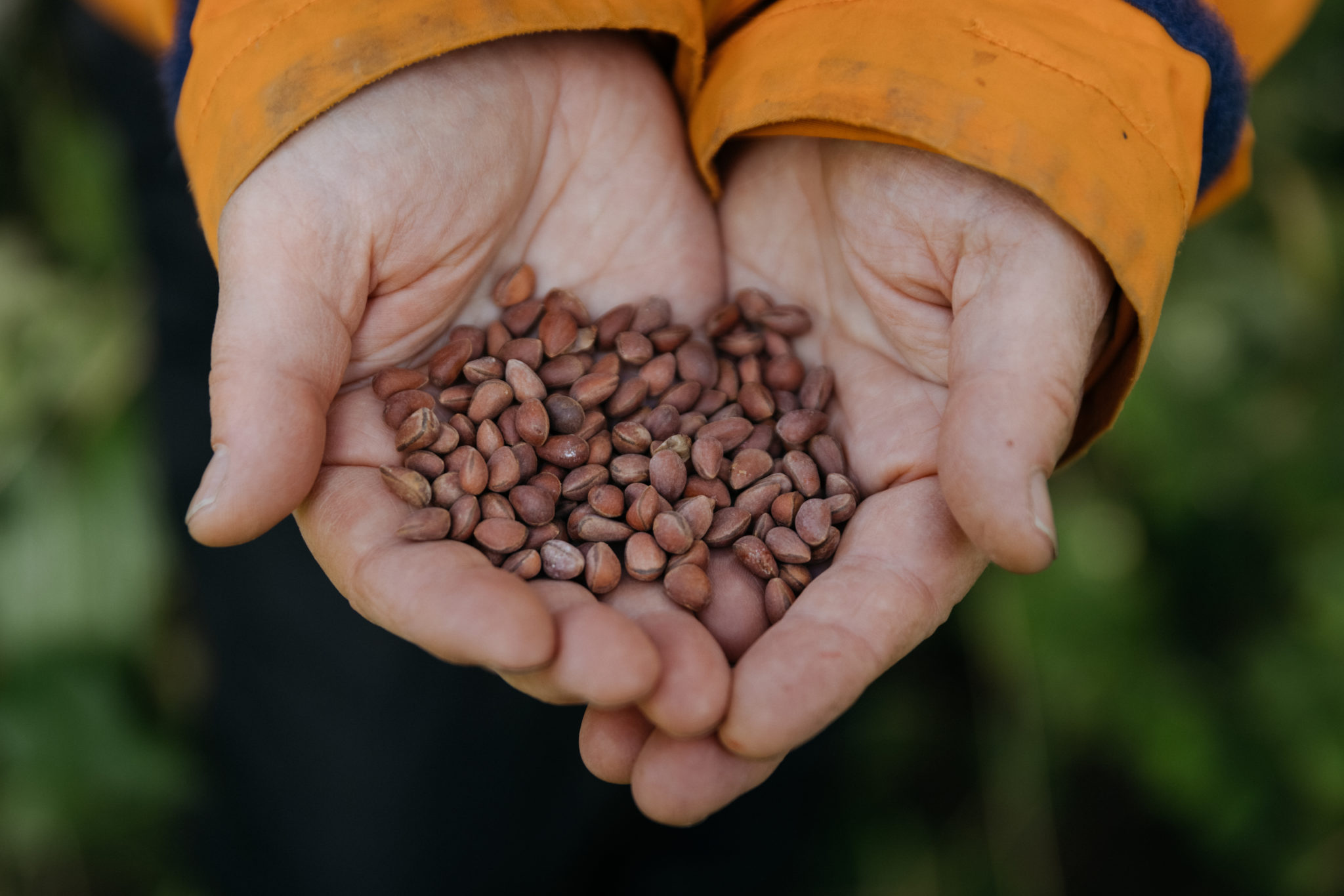
Sybille Haeussler holds whitebark pine seeds. Photo: Marty Clemens / The Narwhal
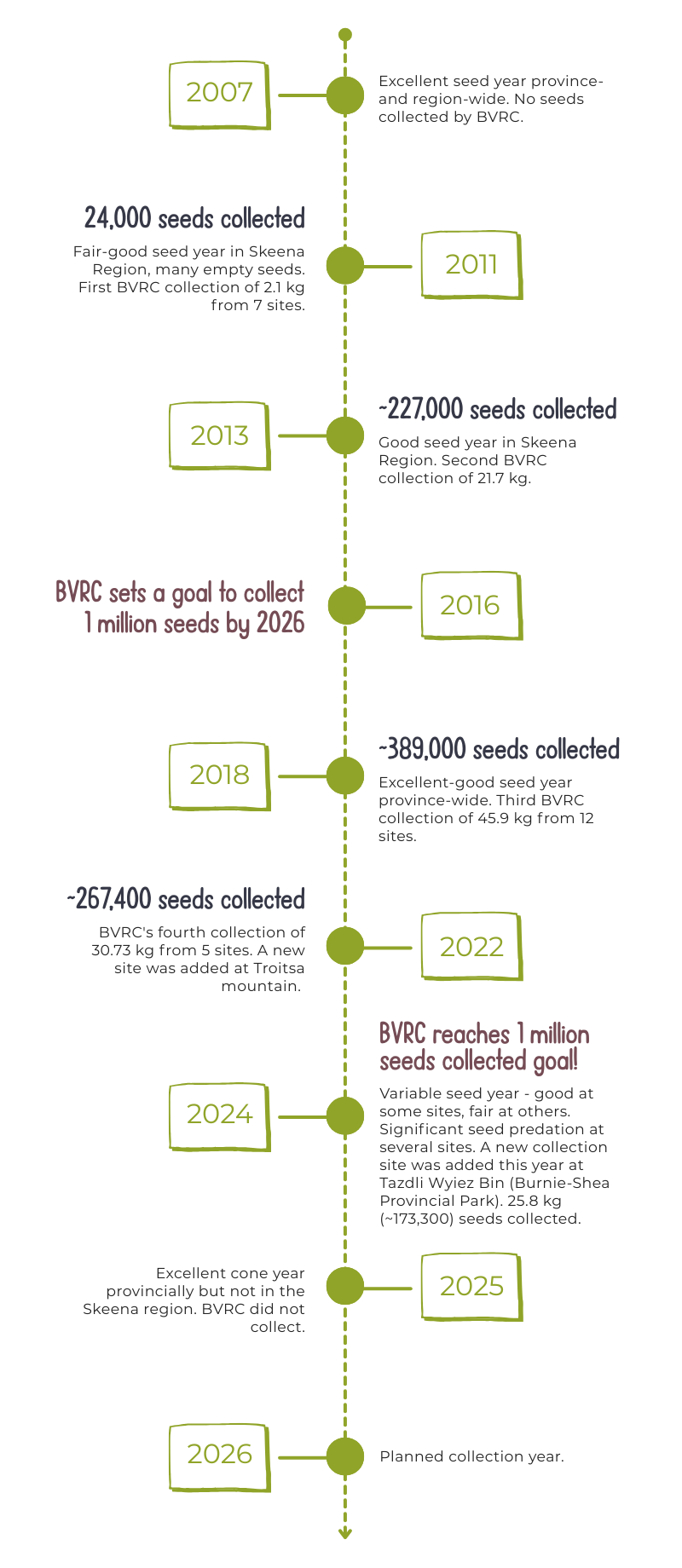
The Research Centre has been monitoring whitebark cone and seed crops in the Skeena Region since 2007.
The BVRC has now located, tagged, and mapped 270 putatively blister rust-resistant parent trees at 16 locations across north central and northwest BC.
Whitebark Pine Seed Collection Process
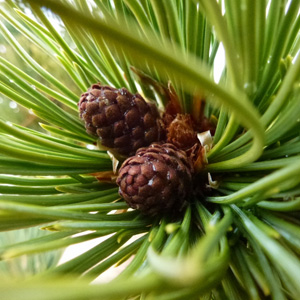
Reconnaissance
In the early spring, the cone crop is assessed by visiting sites in different geographic areas to look how the conelets are developing. Cone crops can be highly variable even with our Skeena Region.
Caging
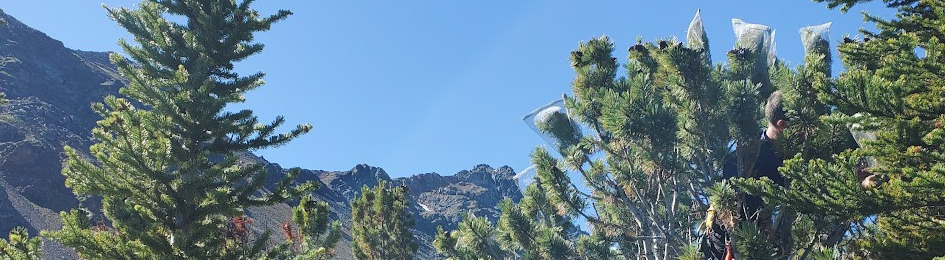
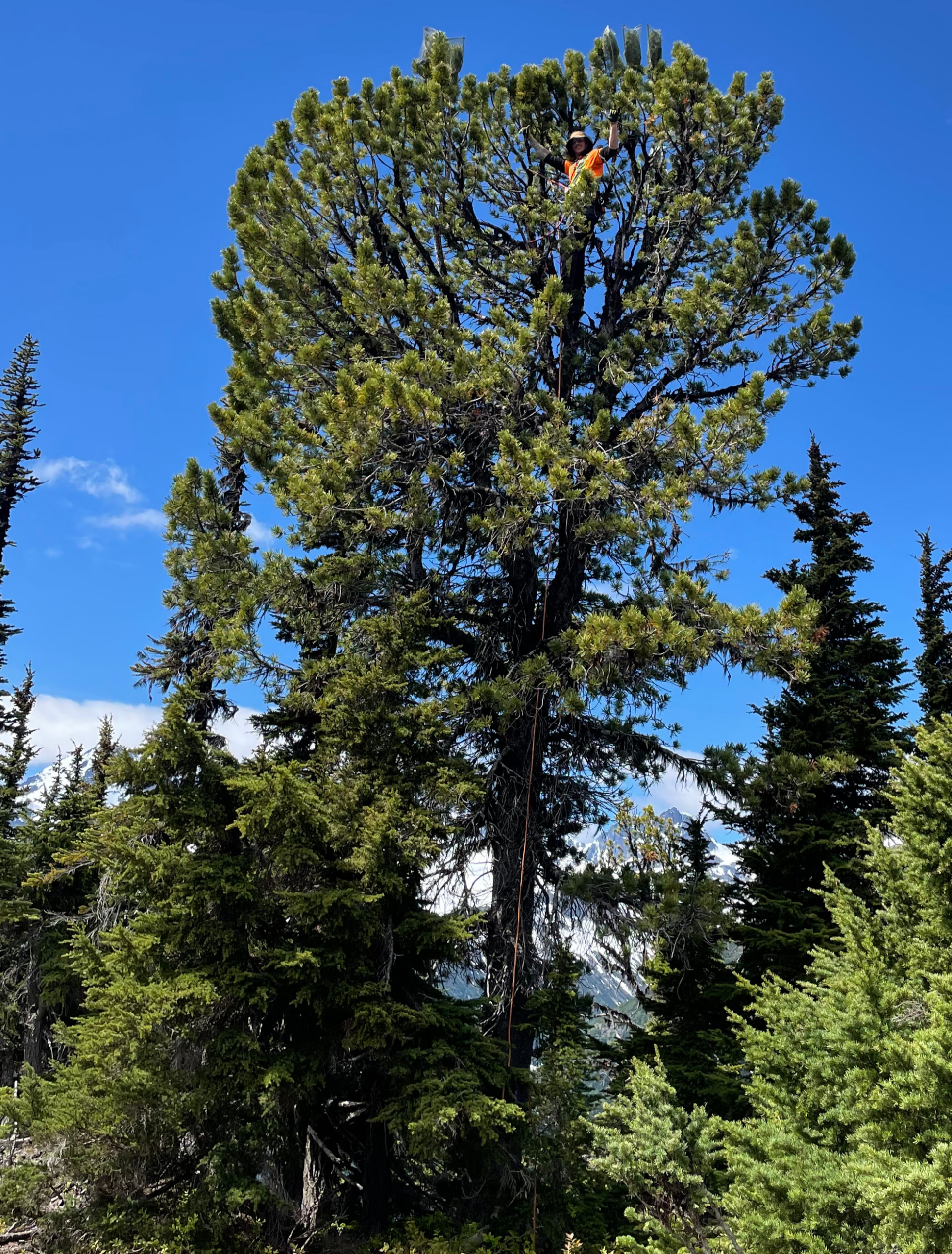
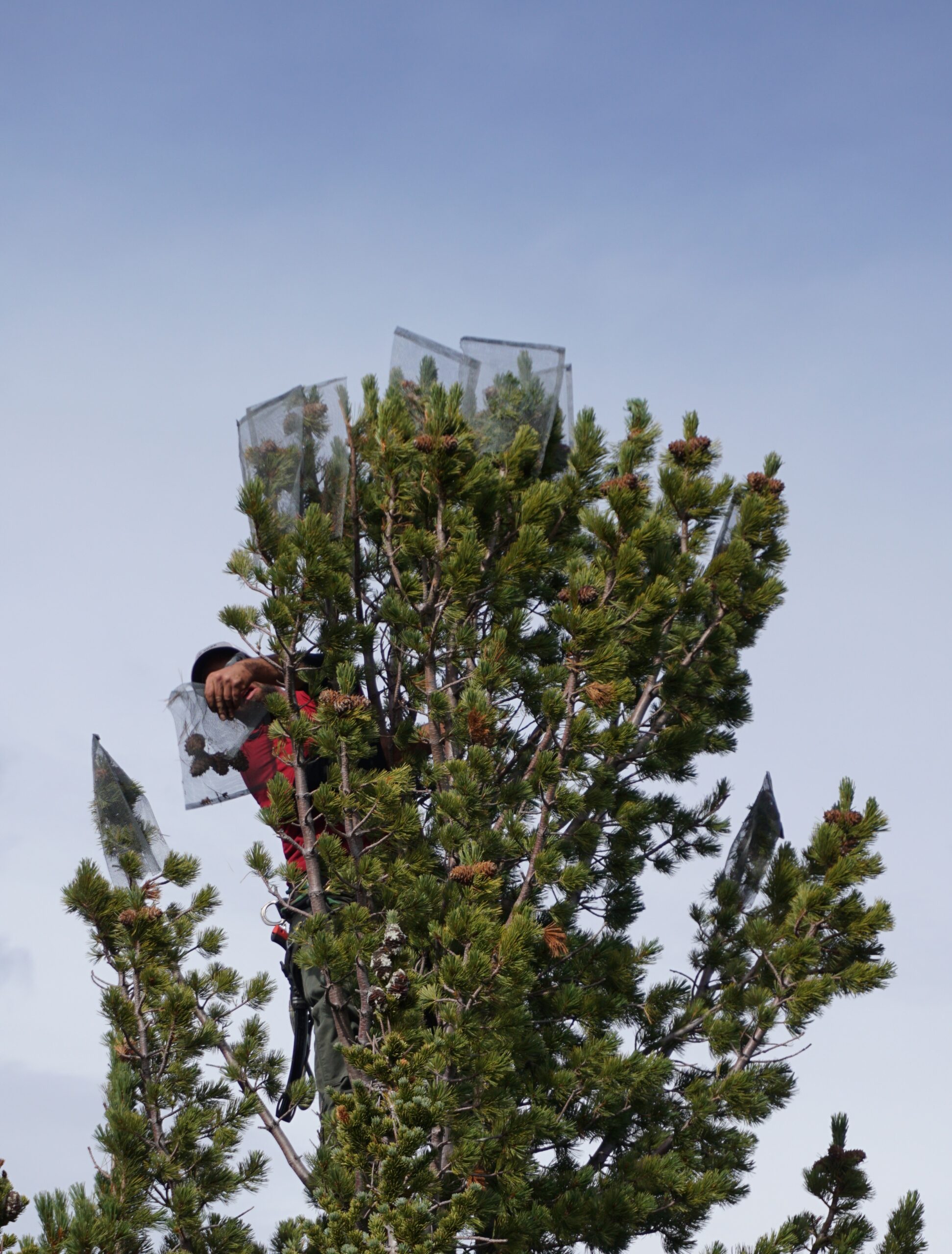
In mid-spring, we target sites identified as having strong cone crops. Skilled tree climbers ascend the canopies of whitebark pine to install protective cages over the cones, preventing predators such as squirrels and Clark’s nutcrackers from harvesting the ripe cones before collection. Each collection tree is tagged with a unique identifier.
We often return to trees known to be resistant to white pine blister rust, while also seeking out new candidate trees by identifying individuals that show no signs of infection.
Collection
In the fall, once the cones have matured, climbers return to the canopies to retrieve them. In some years—particularly during low mast years—cone predation is high, and many cages are found to have been breached by squirrels, Clark’s nutcrackers, and occasionally bears. Through experience, we have learned not to use plastic cages, as they are easily chewed through.
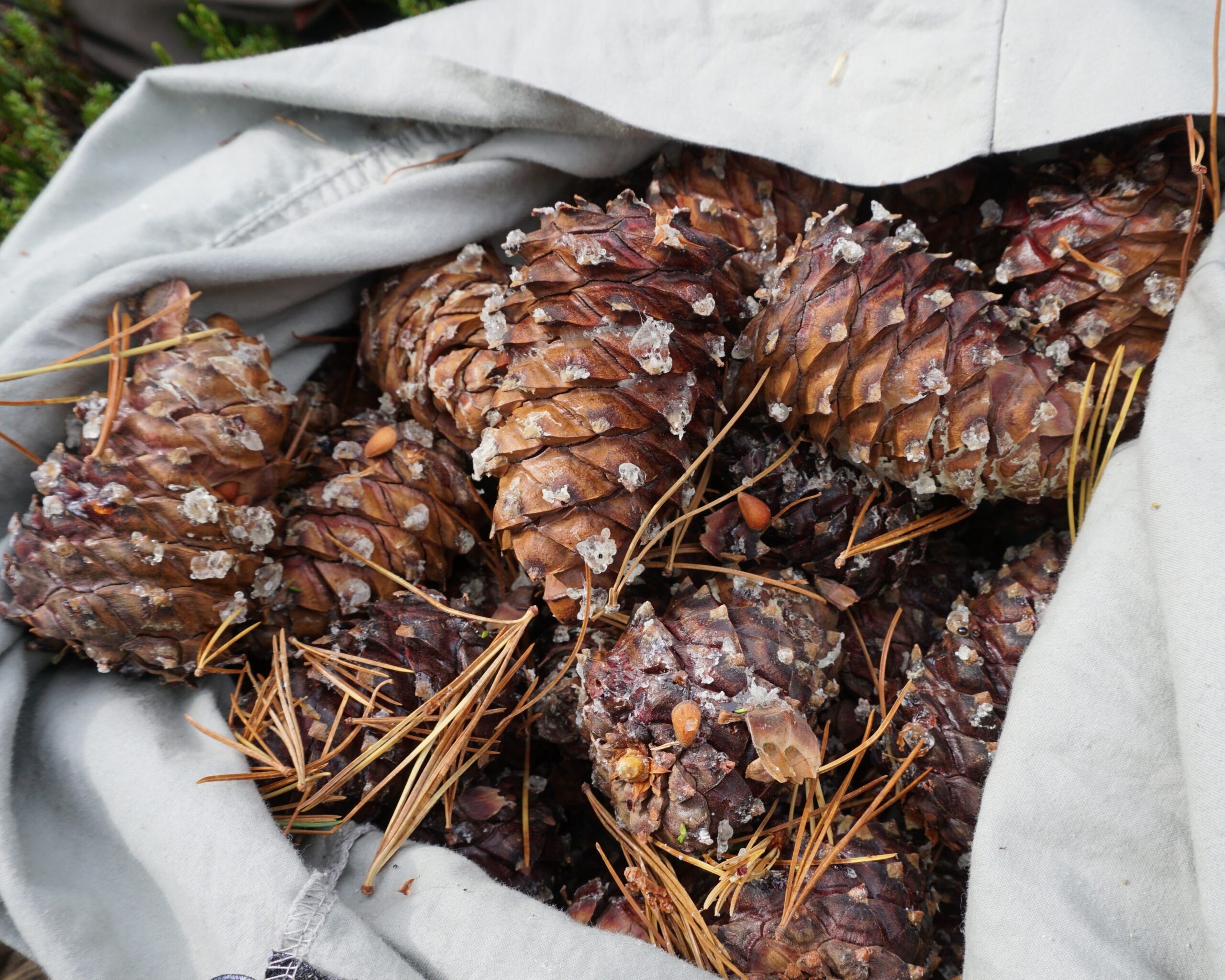
Climbers remove all cones from the tree and drop the cages, with cones inside, down to field
technicians below. Research technicians put the cones into bags labeled with the tree’s ID and take them back to the office for drying.
Shucking
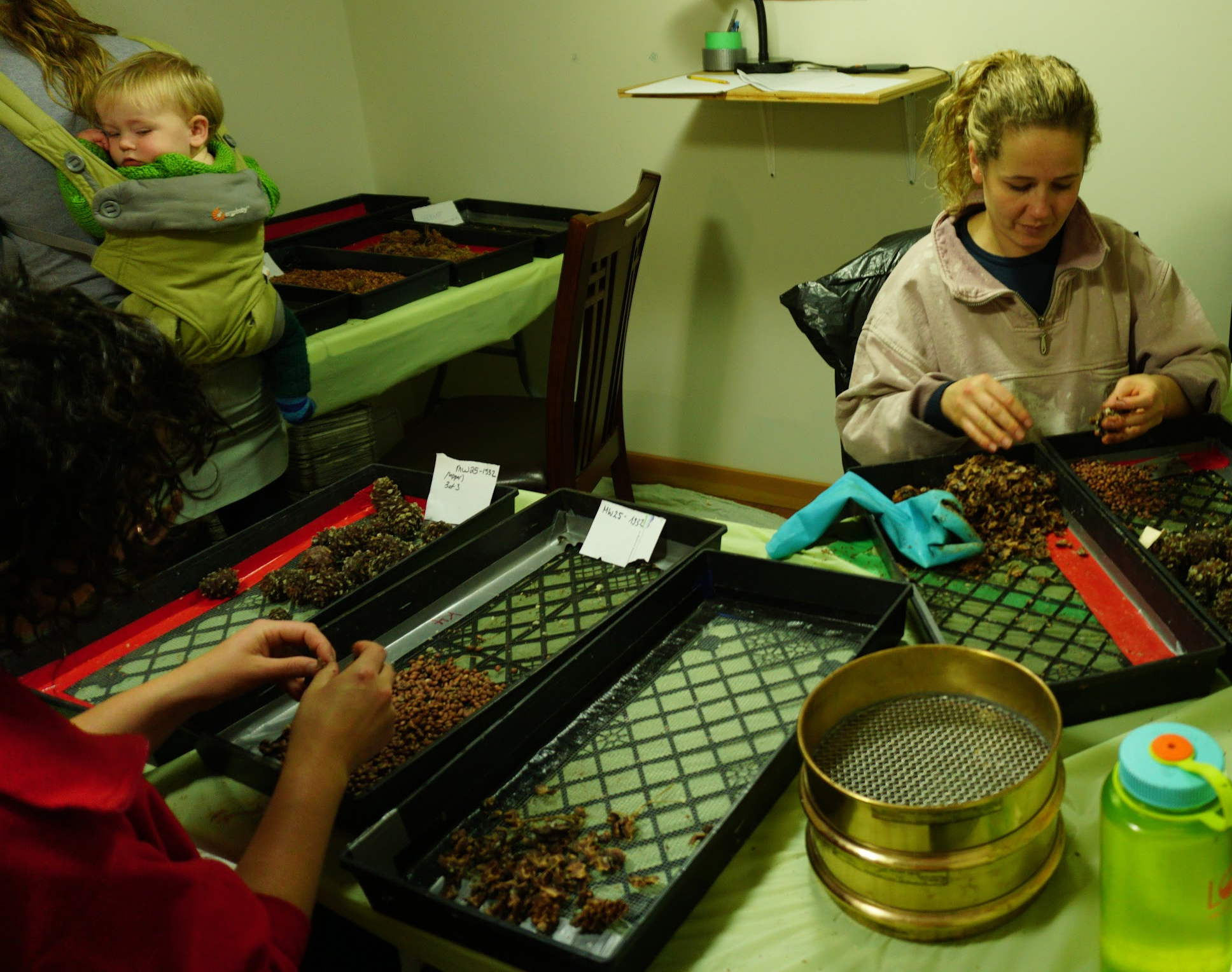
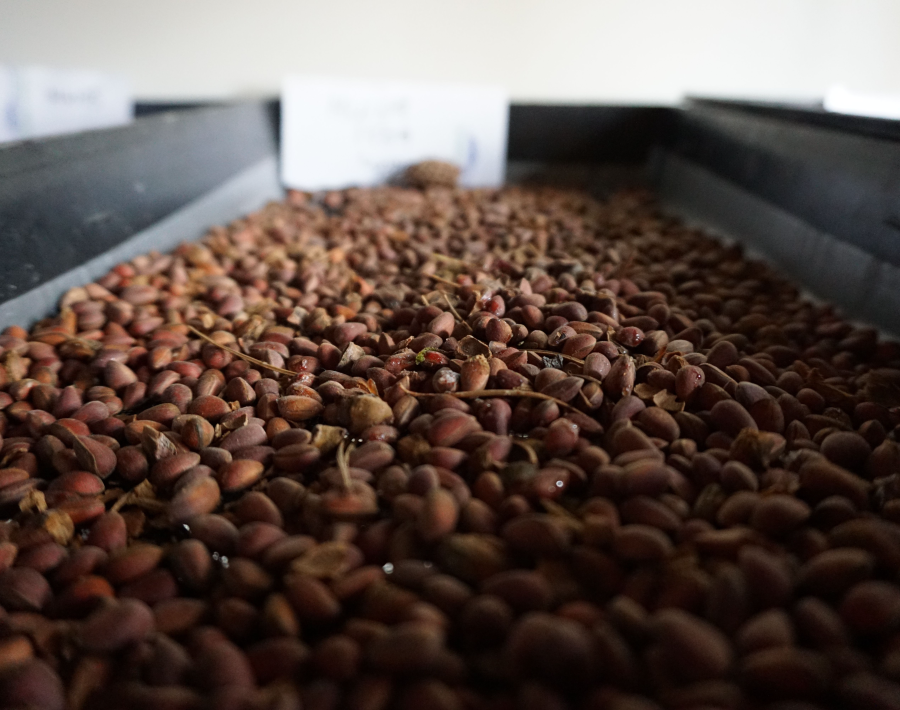
Once the cones have dried, we gather the crew to begin shucking. Great care is taken to ensure that every seed can be traced back to its parent tree.
Dried seeds are stored at the BC Tree Seed Centre until they are needed. Operational seedlots that meet the Chief Forester’s Standards for Seed Use are registered in the SPAR system and are available for general restoration efforts. Please contact us to enquire about seed availability for northern BC whitebark pine restoration projects.
Seeds reserved for gene conservation, blister rust screening, research, and planting in BC Provincial Parks are stored individually by seed family (parent tree) and are not available for general use.
Identifying Rust-Resistant Trees
An essential component of seed collections from putatively blister-rust resistant whitebark pine parent trees is blister-rust screening to test whether progeny from parent trees are actually resistant to white pine blister rust. Rust screening trials take place under controlled conditions in a nursery or laboratory setting, or under field conditions. In the laboratory trials, leaves collected from infected Ribes species such as gooseberries or currants are placed on a screen above container-grown whitebark pine seedlings from selected seed families, just prior to the release of spores. Spore fall is monitored until the desired inoculum density is reached. Ribes leaves are then removed and the temperature is raised to 20°. Seedlings are left in the inoculation chamber for approximately 48 hours to ensure spore germination and infection of the pine needles, then the seedlings are transported outside and monitored over 5 years for disease symptoms (initially, needle lesions or spots) and mortality.
Since 2014, the BVRC has contributed seeds from our 2013, 2018, 2022, and 2024 seed collections for rust resistance screening nursery and field trials in BC and the western US. As intake each year is limited, it will take many years before all 270 families are screened.
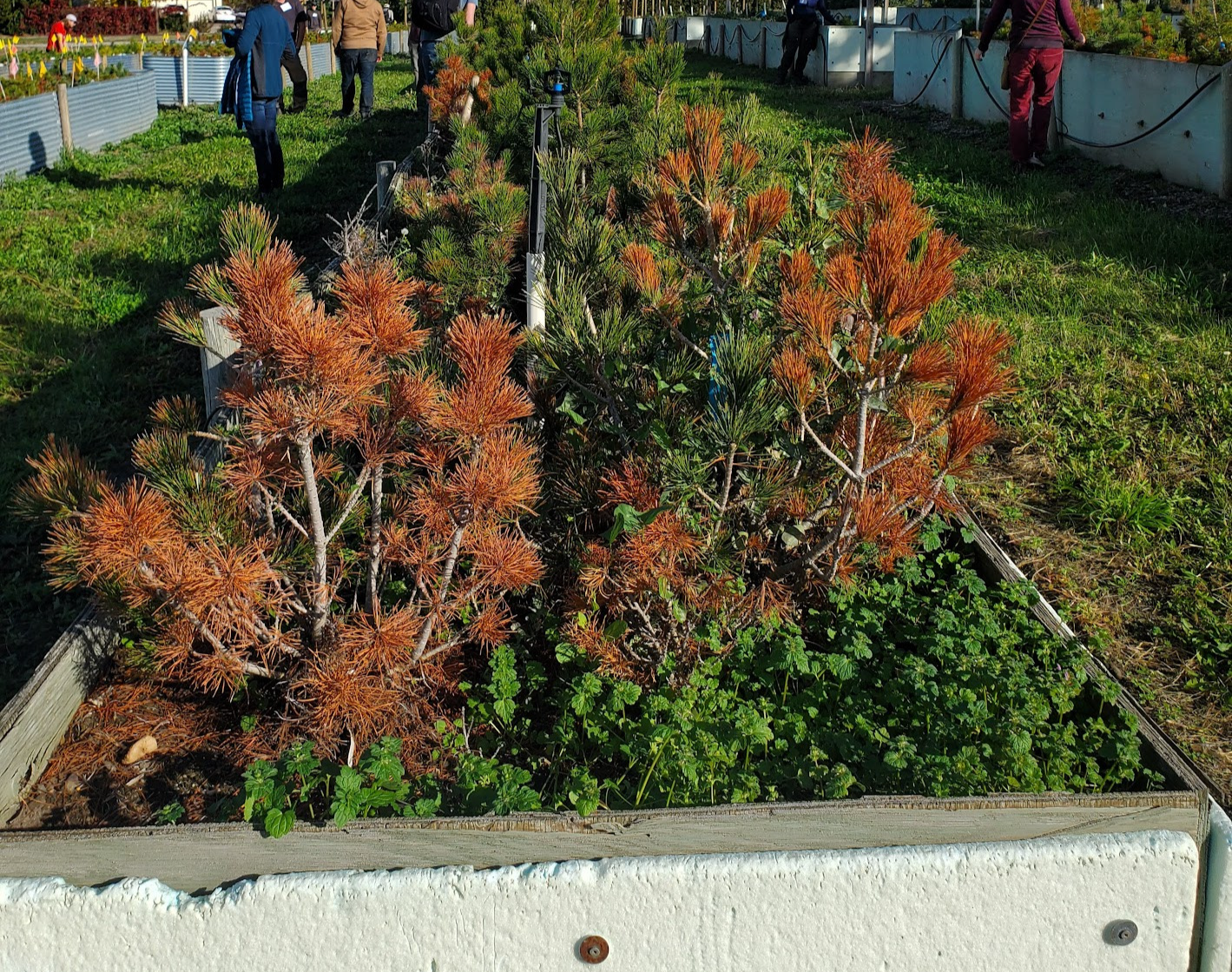
Seedlings that were inoculated in 2016 at the Kalamalka Research Centre.
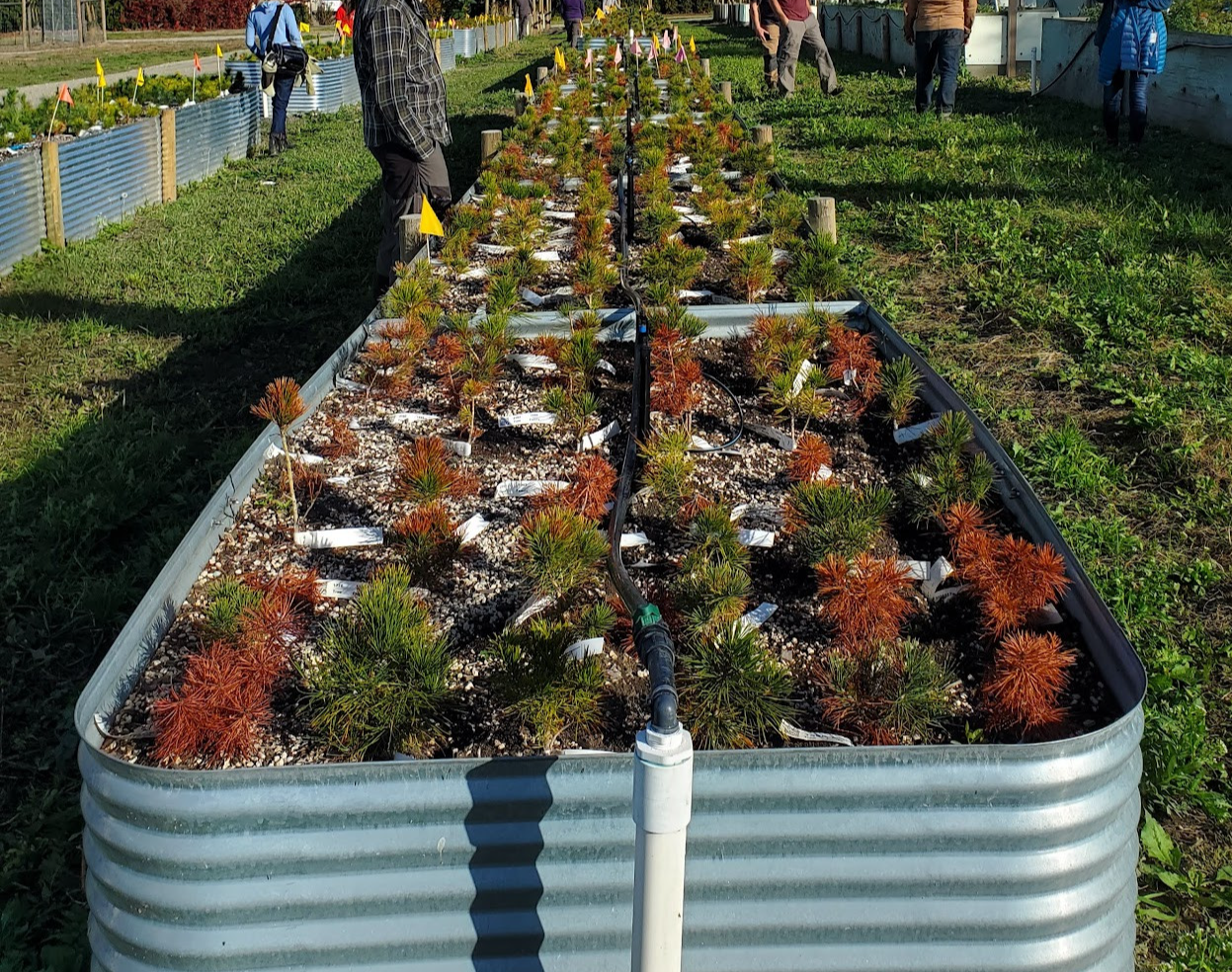
Seedlings that were inoculated in 2022 at the Kalamalka Research Centre.
Our best-performing seed families so far include two families from Kidprice Lake in Nenikekh/Nanika-Kidprice Provincial Park, one family from Hunter Basin in the Telkwa Mountain Range and one family from the Rhine Crag mining road on Mount Sweeney. One of the Kidprice families (from a beautiful open-grown ridge-top tree known as K9), has the highest resistance to blister rust of any tree tested in British Columbia so far.
Interestingly, northern seed families have tended to perform better in inoculation trials carried out in the US and southern BC than southern families. In fact, of 27 families inoculated at Kalamalka Forestry Centre in 2016, the top 7 (and 9 of the top 10) were BVRC families from the Skeena Region. This is a very encouraging early result from our seed collection program but could be an artefact of the inoculation regime that may not hold up in field trials. The 87 seed families sent to Dorena in 2019 are part of a more comprehensive study to investigate why northern families perform so well in these tests.
Families that perform well in blister rust screening trials will be propagated in several new whitebark pine seed orchards planned for BC. Some resistant seedlings from the trials may be transplanted directly into these seed orchards. Scions will also be taken from the highest performing parent trees and grafted onto root stock. This is a time-tested method for obtaining cones and seeds from superior trees that is used elsewhere in BC to produce genetically improved (“A” class) tree seed for commercial tree species such as Douglas-fir, white spruce and lodgepole pine.