


Why Do We Model Wildfire? Insights from the Bulkley-Morice TEF
About the Seminar and Open House:
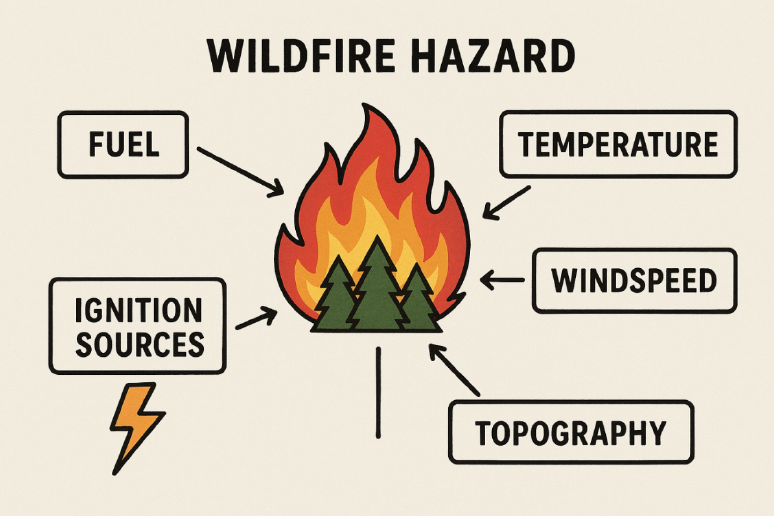
This presentation introduces the Bulkley–Morice Time-Based Empirical Fire Model (BuMo TEF), which has been developed to support the Bulkley-Morice Wildfire Resilience Project’s goal of enhancing ecosystem and community wildfire resilience. The TEF model synthesizes the interactions among fuels, weather, topography, and human fire practices to explore how different management strategies influence wildfire behaviour.
BuMo TEF simulates ignition, spread, and extinguishment across a real forest landscape, enabling users to test stand-level treatments (e.g., fuel management, prescribed fire) and landscape-scale options (e.g., fuel breaks, altered species or age-class patterns). Given the inherent uncertainty in predicting future fire locations and behavior, the model is run hundreds of times to evaluate how management choices perform across a wide range of plausible wildfire scenarios. This results in a practical decision-support tool for assessing wildfire hazards over large areas and identifying which interventions most effectively enhance community and ecosystem resilience.
12:00-1:00 pm – Seminar Presentation at The Old Church and via Zoom
1:00-2:30 pm – Open House at The Old Church – connect with the BuMo project team and discuss the Bulkley Morice Wildfire Resilience Project
About the Presenters
Dr. Andrew Fall is the president and primary researcher at Gowlland Technologies Ltd. He is the principal architect and developer of the Spatially Explicit Landscape Event Simulator (SELES), a tool for constructing and running spatio-temporal landscape models over extensive timeframes and large spatial areas. His research focuses on tools and methodologies for constructing, running, and visualizing spatio-temporal models of landscape dynamics.
Andrew has collaborated on various landscape modelling projects across Canada and abroad, particularly in British Columbia, exploring long-term spatial forest dynamics and sustainable forest management, including the impacts of management practices and natural disturbances on wildlife habitat and timber supply.
Don Morgan is a conservation ecologist with interests in describing and analyzing  socio-ecological systems, particularly in conservation assessment and planning. He is a research data scientist heavily involved in conservation and climate connectivity, watershed assessment, wetland conservation, and wildfire resilience.
Don’s work bridges science and decision-making; he served as the science advisor to the Skeena East Environmental Stewardship Initiative, collaborating with the upper Skeena Nations and Provincial Government agencies to develop and conduct resource value assessments and monitoring for the Skeena. He also contributed to the development of the Province’s Cumulative Effects Framework and co-led the updated conservation status assessment of Grizzly Bears in British Columbia.